
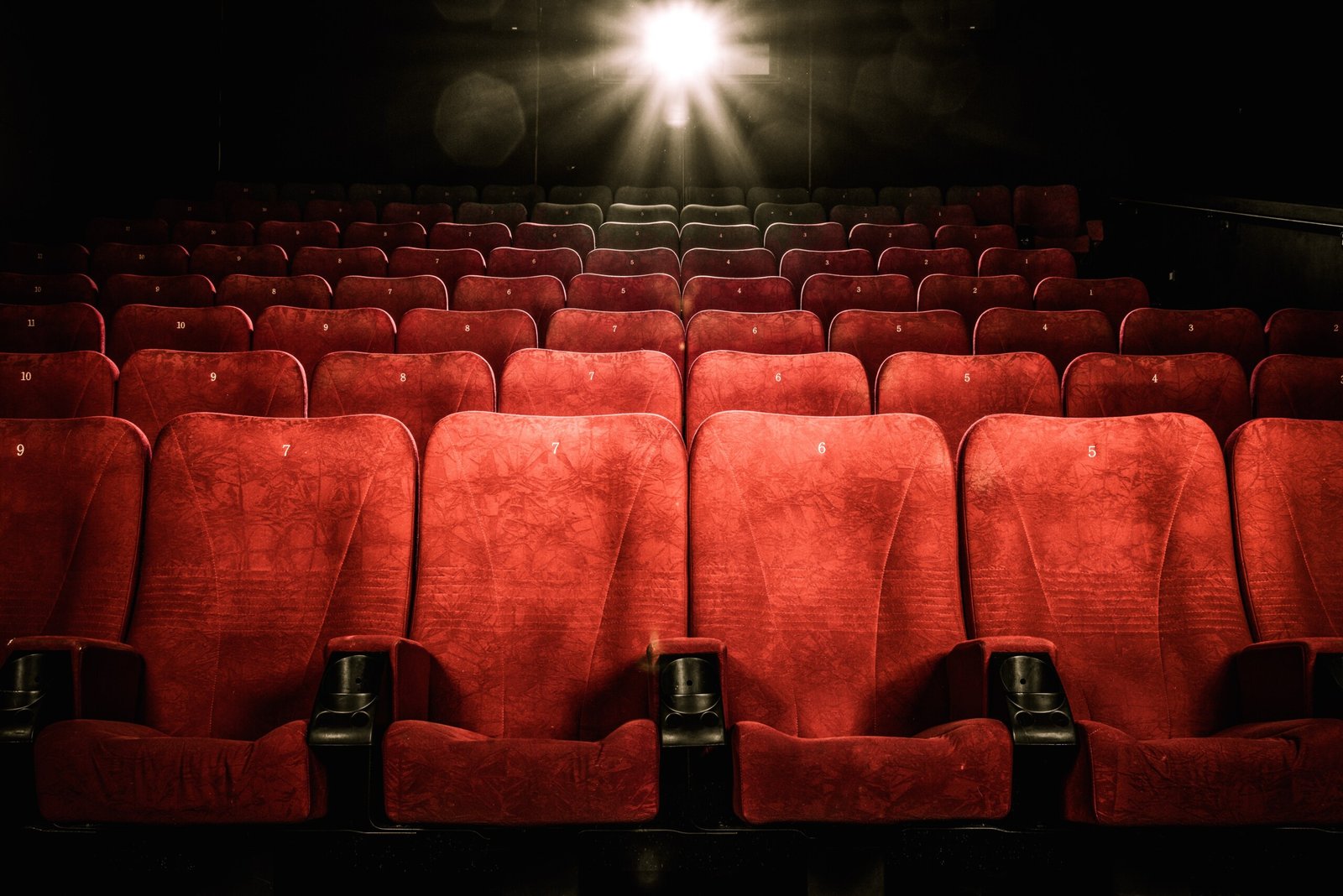
Welcome to this corner of my website, where I turn from capturing light through a lens to examining how light captures us on screen.
Film has been my constant companion since I was five or six years old, drawn inexplicably to the films of the thirties and forties, the adventurous epics of the eighties, the romantic, the sinister, the dark. I was never shielded from cinema’s full spectrum, and perhaps that early exposure shaped my understanding that film, like life itself, resists easy categorisation.
During my academic years at the University of New South Wales, I was fortunate to study under remarkable minds who guided me through the language of cinema with a passion that rivalled Berkeley’s legendary film programme. From David Bordwell’s foundational insights to Susan Sontag’s politically charged critiques, my education expanded beyond film theory into history, psychology, and philosophy. I found myself reading Bergson to better understand photogénie and French impressionist filmmaking—the subject of my honours thesis—because cinema demands we understand not just what we see, but how we see.
This journey led me to a fundamental realisation: I find it nearly impossible to hate a film, and more importantly, impossible to rate one. There’s something deeply anxiety-provoking about living in a world where our art is judged on a quantifiable basis—reduced to numbers on a scale from zero to ten. We don’t walk into galleries assigning numerical scores to paintings or sculptures. We don’t rate symphonies out of five stars. Yet somehow, cinema—this profound visual art form—has been subjected to this reductive system.
Yes, some films are undoubtedly better than others, but isn’t that judgment inherently subjective? What troubles me most is how easily critics pass judgment on filmmakers when they themselves have never picked up a film camera, never studied the language of cinema, never learned how to truly read a film. I’m reminded of Brené Brown’s renowned TED talk on vulnerability and shame, where she references Theodore Roosevelt’s “man in the arena”—unless you are the person in the arena, bloodied and striving, you cannot understand what it truly takes to create.
The anxieties that come with creation, the vulnerability of putting your vision into the world only to have it quantified by those who may have never experienced the weight of that creative responsibility—this strikes me as not just unfair, but fundamentally flawed. Perhaps this numerical system exists because it’s the most marketable way to make art palatable to what the industry assumes is a less educated audience. But in doing so, we underestimate that very audience.
History has shown us the folly of hasty dismissals. Films dismissed in their time find new appreciation decades later, often described as having been “ahead of their time.” This suggests our rating systems capture not the inherent value of a work, but merely our temporary inability to understand it.
So you won’t find numerical ratings here. No stars, no scores, no whispered blasphemies about what was “bad” or “poorly executed.” Instead, I choose to explore the messages films deliver, the parables they tell, the coded meanings they embed. Every filmmaker’s intention—if it’s not purely commercial—is essentially to get a message across. And I’m concerned that there are good films with profound dialogues and important discourses that aren’t given the attention they deserve simply because they don’t fit neatly into our quantified system.
From the dawn of time, humans have drawn on cave walls not to be rated, but to tell stories. Cinema continues this ancient tradition, and I believe it deserves the same reverence we give to those prehistoric storytellers.
In our media-saturated age, where financial success and marketing power often determine a film’s perceived worth, I want to step away from the noise. I want to help you understand where a film’s value lies, removing numbers from the language of cinema and returning to pure appreciation of the medium’s power to reflect ourselves, our society, and the deeper philosophical questions that define human existence.
Cinema is a mirror, an illusion that beckons us from the screen, and we become fixated—not because we’re passive consumers, but because we recognize something profound in that reflected light. It shows us how we interpret the world we see every day, revealing truths about our feelings, our fears, our hopes.
I realise it may seem unorthodox to place these film writings on a website primarily focused on my photographic work, but both pursuits share the same foundation: understanding how images shape meaning, how light carries story, how the visual becomes visceral. While I may not be able to share these thoughts in a lecture theatre or classroom, I can offer them here, hoping they provide both the catharsis I need to tell these stories and the illumination you might find in seeing cinema through a different lens.
I hope what I write ignites something in you—a deeper appreciation for the medium that has captivated humanity for over a century. Cinema is waiting to be understood, not judged, and I invite you to join me in that understanding.
Thank you for reading, and welcome to the conversation.
What follows are not reviews, but invitations to see more deeply.